Maths, English and creativity build the foundation. Technology helps children build what comes next.
Technology is already part of the school curriculum. Around the world, countries including the UAE, China, South Korea, Japan and England are teaching coding, computing or AI from the primary years.
Every industry is changing. The children who understand how these tools work will have more power to shape what comes next.
It is already a school subject
Many parents still think coding is just an extra. It is already part of school learning.
The Australian Curriculum includes Digital Technologies from Foundation to Year 8. In NSW, technology is taught through primary school and is mandatory in Years 7 and 8. Students can then choose Computing Technology in Years 7 to 10 and Software Engineering for the HSC.1
In 2025, 1,778 NSW students were enrolled in HSC Software Engineering.2 Starting earlier gives a child more time to build the skills and confidence these subjects require.
Part of the Australian Curriculum for every student.
Every NSW student studies technology in these two years.
Students can choose to go further.
With its own HSC examination.
Schools around the world are putting AI and coding on the timetable
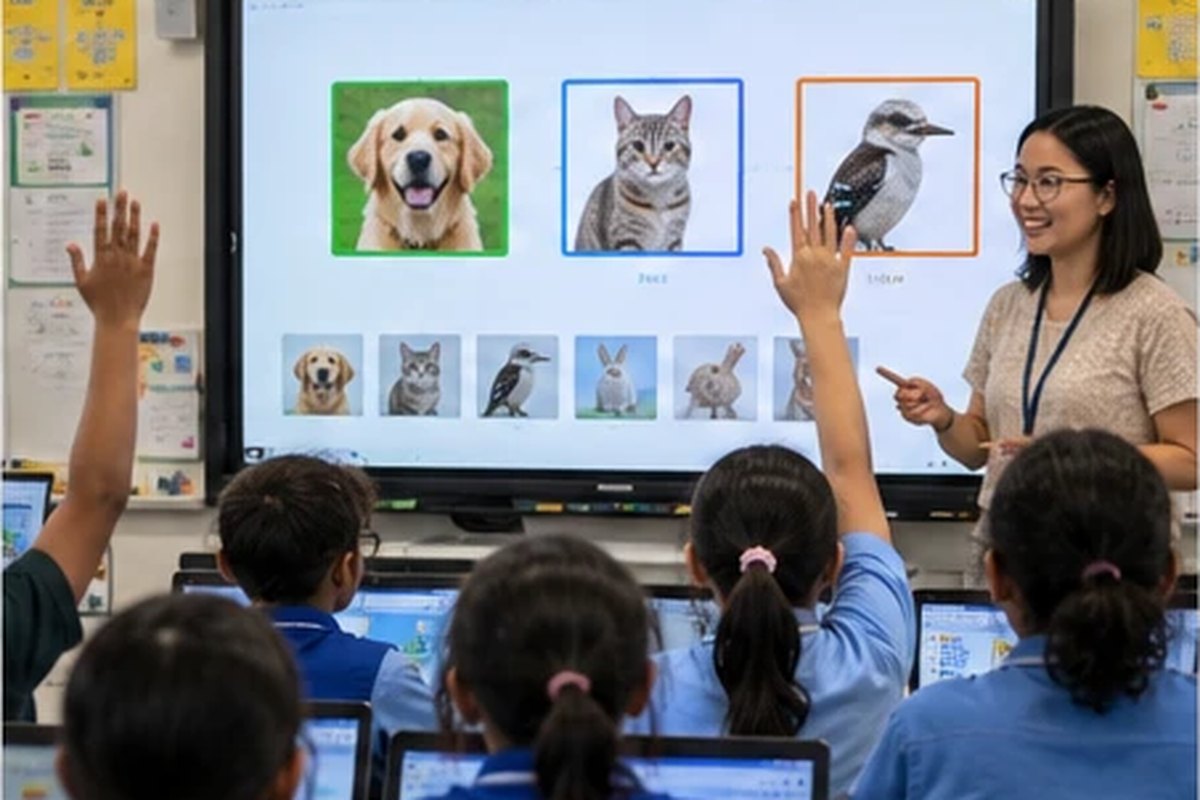
This is not one country's experiment. From England to the UAE, coding and AI are now part of school from the primary years, and China is rolling it out across every primary and secondary school.
Children are being taught not just to use technology, but to understand how it works and create with it.
England
Computing became a compulsory national curriculum subject at every key stage, from age five.8
South Korea
Software classes became compulsory in middle schools, then 17 hours a year in Years 5 and 6.7
United Arab Emirates
Artificial intelligence became a subject in every government school, Kindergarten to Grade 12, from the 2025 to 2026 school year.6
China
National goal of AI education in every school by 2030; a three-stage AI curriculum for all schools from 2025.12,3,4
Estonia
The national AI Leap programme gave 20,000 senior students and 3,000 teachers AI tools and training from 1 September 2025.10
Not just “tech jobs”
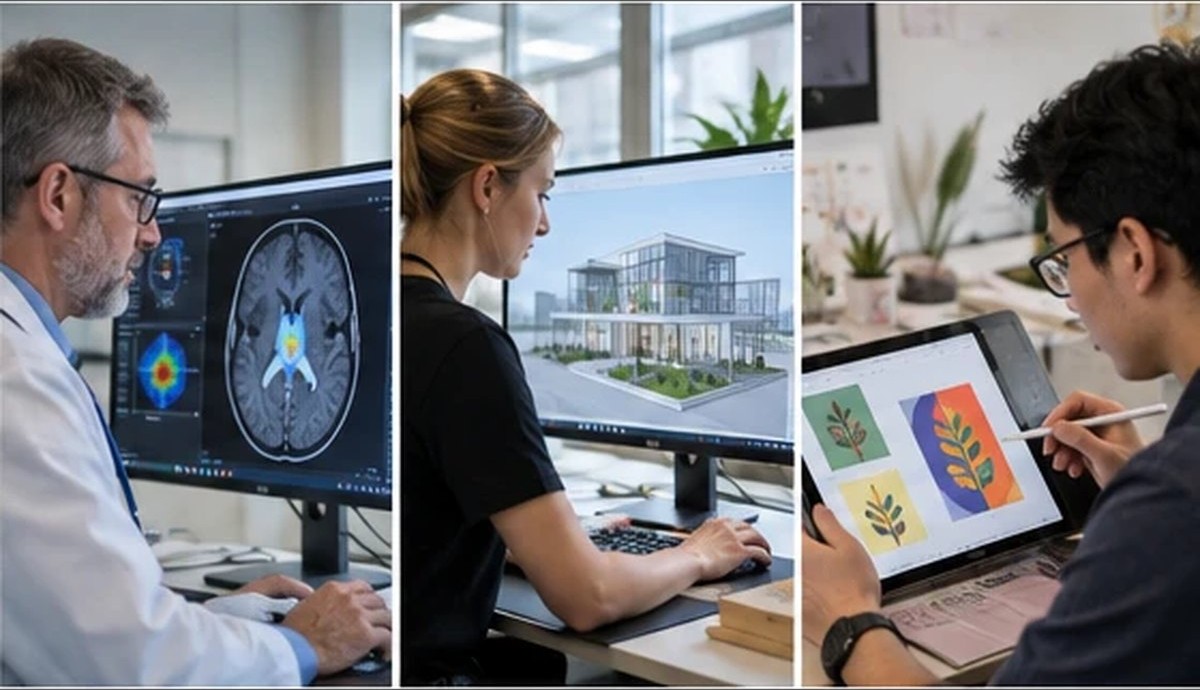
Jobs and Skills Australia found that AI is more likely to augment work than replace it, and that its impact reaches well beyond programmers into administration, finance, marketing and business.5
Doctors, lawyers, accountants, designers and many other professionals will work alongside these tools.
Knowing how to use AI is one thing. Understanding enough to question it, check it and recognise when it is wrong is another. That is what we want children to learn.
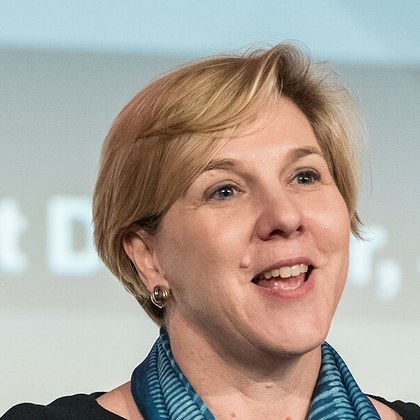
Robyn Denholm, chair of Tesla
The daughter of migrants who ran a petrol station in Milperra, in south-west Sydney. She pumped petrol and did the accounts there as a teenager, went to a public high school, and trained as an accountant. She rose to chief financial officer of a technology company, and has chaired Tesla's board since 2018.15
She had to pick up the technology on the job, over years. A child who starts now begins with it, and goes further.
A skill many children have not yet had the chance to build
Families already invest in strong foundations through school, tutoring, music, sport and other activities. Technology can sit alongside them.
A twelve-year-old who can design a game, write a program and explain why an AI answer may be wrong has developed more than computer skills. She has learned to create, solve problems, test ideas and think critically about the tools she uses.
That is the kind of capability we want children to build early, before technology becomes something they simply consume.
What we teach, and how
AI Creators Academy offers four courses for Years 4 to 12: Coding for Kids, Game Making, Understanding AI and Virtual Robots, at our Cabramatta Centre and live online across Australia.
Courses run for two hours a week over a ten-week term and are designed and taught by a qualified Mathematics and Computing teacher who is also a software engineer with 20+ years of industry experience.
In every course, children build something and must be able to explain how it works, whether they wrote the code themselves or used AI to help create it.
That is the difference between simply using technology and learning to understand it.
Start before the field catches up
Tell us your child's year and we will tell you where they should start.
Enquire today →Sources
- Australian Curriculum, Digital Technologies (Foundation, called Kindergarten in NSW, to Year 8); NSW Education Standards Authority, Computing Technology 7–10 Syllabus (2022); Software Engineering 11–12, 2025 HSC examination. curriculum.nsw.edu.au, nsw.gov.au
- NSW Education Standards Authority, 2025 HSC course enrolments, Software Engineering: 1,778 students. nsw.gov.au
- China Daily, 16 May 2025, “Guideline to regulate use of artificial intelligence in schools”. chinadaily.com.cn
- CGTN, 2 September 2025, “Beijing rolls out AI education across all primary, secondary schools”: at least eight class hours (lesson periods) per academic year. cgtn.com; China Daily, 21 October 2025, “Beijing makes AI education compulsory in public schools”: over 1,400 primary and secondary schools, all grade levels. chinadaily.com.cn
- Jobs and Skills Australia, Our Gen AI Transition: Exposures, Adaptation, Dynamism (2025). jobsandskills.gov.au
- Arab News, 5 May 2025: the UAE Cabinet approved “Artificial Intelligence as a subject across all stages of government education in the UAE, from kindergarten to grade 12, starting from the next academic year”. arabnews.com; Gulf News, 23 August 2025: introduced in public schools from the 2025–2026 academic year, within the Computing, Creative Design and Innovation course. gulfnews.com
- British Council, 18 February 2017, “Computing (coding) becomes required subject from next year in Korea”: required in middle schools from 2018; 17 hours a year for fifth and sixth graders from 2019. britishcouncil.org
- UK Department for Education, press release, 4 December 2013: “Computing will be a compulsory part of the national curriculum for schools in England at all key stages from September 2014”. gov.uk; National curriculum in England framework: Key Stage 1 is ages 5 to 7. gov.uk
- Nikkei Asia, 27 March 2019: “Computer programming will become a mandatory subject in Japan's elementary schools from April 2020”. asia.nikkei.com
- Estonian Ministry of Education and Research, 25 February 2025, “AI Leap programme”: launch 1 September 2025 with 20,000 students in grades 10 and 11 and 3,000 teachers. hm.ee
- Ministry of Education of China, Notice on Strengthening Artificial Intelligence Education in Primary and Secondary Schools, 2 December 2024, translated by the Center for Security and Emerging Technology, Georgetown University: “By 2030, basically universalize AI education in primary and secondary schools.” cset.georgetown.edu
- Global Times, 12 May 2025, “China issues guidelines to promote AI education in primary and secondary schools”: three levels (primary, junior high, senior high); primary students may not use open-ended generation tools on their own; “from localized pilots to nationwide implementation”. globaltimes.cn
- Gulf News, 4 May 2025, “UAE to launch AI curriculum starting in kindergarten: 7 core concepts revealed”. gulfnews.com
- Forbes Australia, “Meet Elon Musk's boss”: her Maltese-Scottish parents migrated from Libya and ran a full-service petrol station in Milperra, south-west Sydney, where she washed oil bottles, cleaned windscreens and pumped petrol; she attended Peakhurst High and studied economics at the University of Sydney. forbes.com.au; Wikipedia, Robyn Denholm: appointed chair of Tesla in November 2018; CFO of Juniper Networks from 2007. wikipedia.org. Portrait by CeBIT Australia, CC BY 2.0, via Wikimedia Commons.